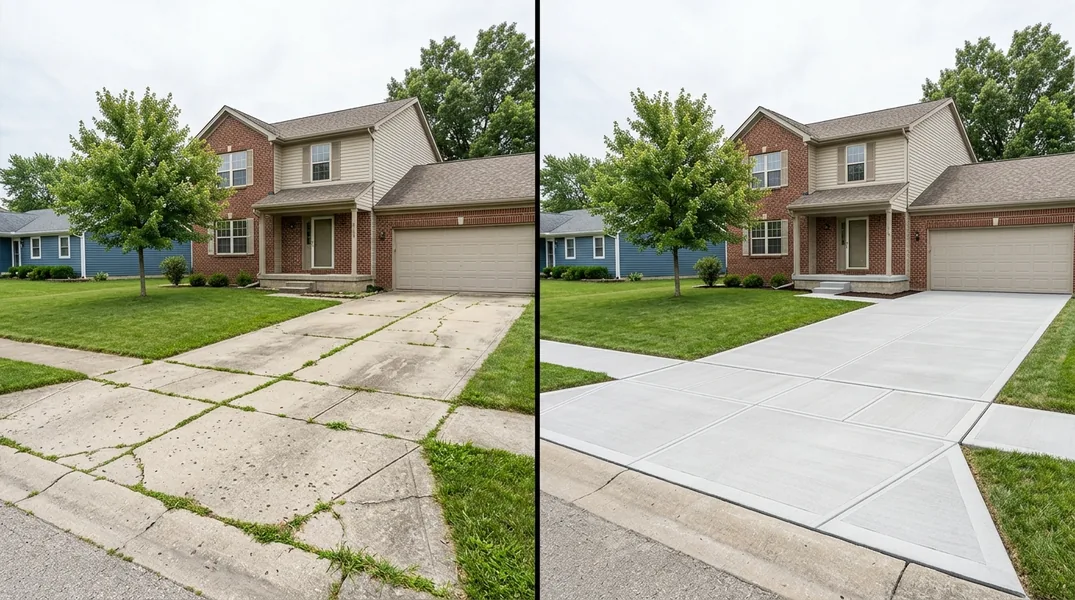
Why Resealing Your Concrete Driveway Matters in Central Indiana
Central Indiana's climate presents unique challenges for concrete surfaces. Freeze-thaw cycles, road salt, UV exposure, and heavy rainfall all work together to break down your driveway's protective surface over time. If you own a home in Indianapolis or the surrounding areas, you know how quickly weather can take a toll on outdoor concrete.
Resealing your Concrete Driveways is one of the most effective maintenance steps you can take to extend its lifespan and keep it looking great. Without a fresh seal, water penetrates the concrete, leading to cracks, spalling, and costly damage. A properly sealed driveway resists staining, resists salt damage, and maintains its structural integrity through countless Indiana winters. Think of sealing as an investment that pays dividends by preventing expensive repairs down the road.
Signs Your Driveway Needs Resealing
Knowing when to reseal your driveway is just as important as knowing how. Most concrete driveways benefit from resealing every two to three years, but Central Indiana's harsh weather may require more frequent attention. Look for telltale signs that your driveway is ready for a fresh coat. If water no longer beads up on the surface but instead soaks in, the seal has worn away. You might also notice fading color, dark stains that won't wash away, or a chalky white film on the concrete.
Cracks, even small ones, are another warning sign. Once the seal deteriorates, water seeps into those cracks and expands during freezing temperatures, making damage worse. If you're seeing these signs in your Indianapolis driveway, it's time to act. Catching these issues early prevents the need for Concrete Repair & Resurfacing down the line. A simple water test can confirm whether resealing is necessary: pour a small amount of water on your driveway and watch what happens. If it soaks in immediately, your seal is gone.
Preparing Your Driveway for Resealing
Proper preparation is the foundation of a successful resealing job. Before you apply any sealer, your driveway must be thoroughly cleaned and completely dry. Start by removing all debris, leaves, and dirt using a broom or leaf blower. Next, pressure wash the entire surface to remove embedded dirt, algae, and any remaining old sealer. Use a pressure washer set to 3000 PSI or less to avoid damaging the concrete. Pay special attention to low spots where water pools, as these areas accumulate more contaminants.
After pressure washing, allow your driveway to dry completely. This step is critical and often overlooked by homeowners. Applying sealer to damp concrete traps moisture underneath, which can cause the seal to fail prematurely. Depending on weather conditions in Central Indiana, drying can take 24 to 48 hours. On dry, sunny days, the process moves faster. Once dry, inspect the surface for any cracks or damage. If you find significant cracks or deterioration, you may want to consult professionals about Concrete Repair & Resurfacing before sealing. Small hairline cracks can be sealed over, but larger damage requires proper repair first.
Choosing the Right Sealer for Indiana's Climate
Not all concrete sealers are created equal, especially for a region like Central Indiana with its demanding weather patterns. You'll encounter two main types of sealers: penetrating sealers and film-forming sealers. Penetrating sealers soak into the concrete and protect from within, offering excellent water and salt resistance without changing the appearance of your driveway. These are ideal for Indiana's freeze-thaw environment because they allow the concrete to breathe and don't trap moisture. Film-forming sealers, by contrast, create a protective layer on the surface, enhancing color and providing a slight sheen.
For Central Indiana's harsh winters and frequent temperature swings, penetrating sealers typically outperform film-forming options. They resist road salt better and won't peel or flake as easily when exposed to freeze-thaw cycles. Look for sealers specifically labeled as suitable for cold climates or those that resist salt damage. Acrylic sealers offer good UV protection and cost effectiveness, while polyurethane and epoxy sealers provide superior durability but at higher pricing. Consider your budget and the condition of your driveway when making your choice. If you're unsure which sealer is best for your specific situation, reaching out to professionals at Indianapolis Concrete for a free estimate can help you make an informed decision.
Step-by-Step Resealing Process
Once your driveway is clean and dry and you've selected the right sealer, it's time to apply it. Start by protecting surrounding areas like landscaping, vehicles, and adjacent surfaces with plastic sheeting or painter's tape. Most sealers can damage these areas if they come into contact. Read the manufacturer's instructions carefully, as application methods vary by product. Some sealers require a second coat, while others provide adequate protection with one application.
Apply the sealer using a paint roller, squeegee, or sprayer, depending on the product type. Work in small sections, moving from one end of the driveway to the other in a consistent pattern. Avoid over-applying sealer, as this can create a sticky surface or uneven appearance. Apply thin, even coats rather than one thick coat. Most sealers require 24 to 48 hours of curing time before you can drive on the driveway, so plan accordingly. During this period, keep the area clear of traffic and protect it from rain. Colder temperatures in Indiana winters may extend curing time, so check the product label for temperature-specific guidance.
Maintaining Your Sealed Driveway Year-Round
Resealing is just one part of comprehensive concrete maintenance. To maximize the lifespan of your sealed driveway, establish a regular maintenance routine. Sweep regularly to remove debris and prevent dirt buildup. Clean stains promptly to prevent them from becoming permanent. In winter, use calcium chloride or magnesium chloride ice melt products instead of rock salt, which accelerates concrete deterioration. Avoid using metal shovels that can gouge the surface; plastic shovels are gentler on sealed concrete.
During spring and fall, inspect your driveway for any new cracks or damage. Addressing small issues immediately prevents them from becoming major problems. Rinse your driveway with water occasionally to remove salt residue and other contaminants. If you notice significant damage or structural issues developing, don't delay in seeking professional help. The team at Indianapolis Concrete has extensive experience with concrete maintenance and can provide guidance tailored to your specific needs. Call (463) 300-5202 or visit our website at https://indianapolis-concrete-company.com to learn more about keeping your driveway in excellent condition year-round.
Looking for a professional tree service in Indianapolis? Indianapolis Concrete responds fast for all your concrete needs.
Get a Free QuoteOur services: Concrete Driveways · Concrete Patios · Stamped & Decorative Concrete