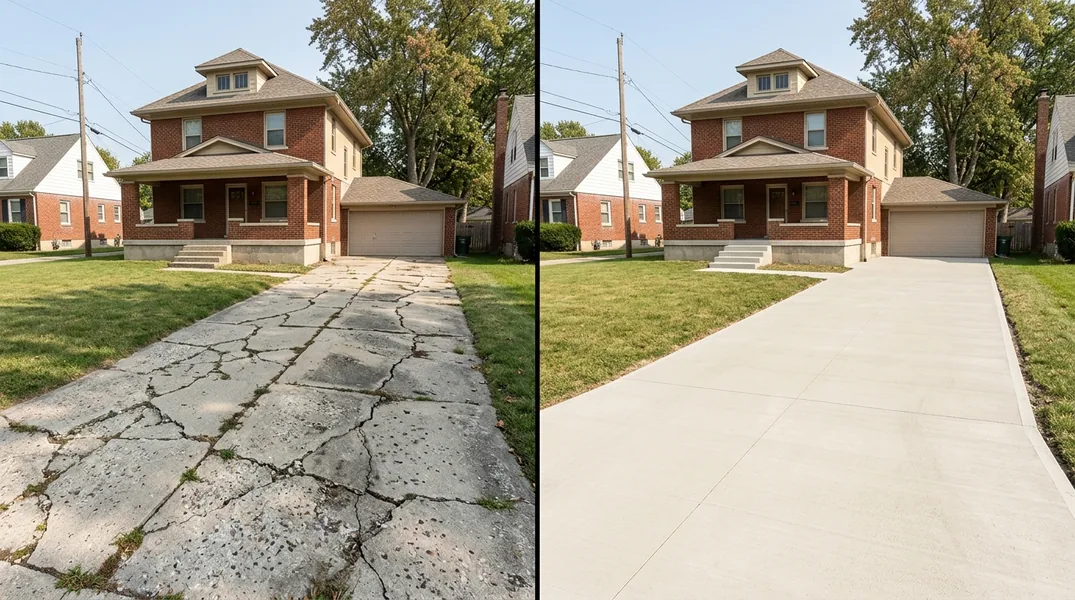
Concrete vs. Pavers: The Key Differences
When it comes to upgrading your outdoor spaces in Indianapolis, two popular options stand out: concrete and pavers. Both materials have earned their place in countless driveways and patios across the region, but they work in fundamentally different ways. Understanding these differences is the first step toward making a choice that fits your home, budget, and lifestyle.
Concrete Driveways are poured as a single, continuous surface that hardens into a solid slab. Pavers, by contrast, are individual units (typically made from brick, stone, or concrete) that are laid side by side and held in place by sand and a compacted base. This fundamental difference affects everything from installation time to long-term maintenance, appearance, and cost. Your choice will depend on your priorities, whether that's durability, aesthetics, ease of repair, or initial investment.
Durability and Performance in Indianapolis Weather
The climate in Indianapolis presents specific challenges for outdoor surfaces. Winters bring freeze-thaw cycles that can stress concrete and pavers alike, while summer heat and occasional heavy rains test their resilience. Concrete, when properly sealed and maintained, can last 25 to 40 years or more. However, the freeze-thaw cycle common in Indiana winters can cause cracking and spalling if the concrete isn't air-entrained or if water penetrates the surface. Pavers, on the other hand, handle freeze-thaw cycles differently because they're individual units that can shift slightly without cracking the entire surface. If one paver is damaged, it can be replaced without affecting the rest of the installation.
That said, concrete has a significant advantage in terms of structural integrity. A properly installed concrete slab won't develop the settling issues that sometimes plague paver installations, where the base can shift over time and create uneven surfaces. Pavers may also allow weeds to grow between units if not properly sealed, and the sand base can wash away during heavy rain. Both materials require maintenance, but the type of maintenance differs significantly. Concrete typically needs resealing every 2 to 3 years and occasional crack repair, while pavers need periodic re-sanding and weed control, though individual damaged pavers are easy to swap out.
Aesthetic Appeal and Design Flexibility
If visual appeal is your primary concern, both concrete and pavers offer impressive options. Stamped & Decorative Concrete can mimic the look of stone, brick, or tile, giving you the appearance of pavers at a lower cost. Modern concrete also comes in various colors and finishes, from polished surfaces to exposed aggregate, allowing homeowners to achieve custom looks that suit their home's architecture. The advantage here is that the design is baked into the surface during installation, creating a seamless, unified appearance.
Pavers, however, offer unmatched flexibility in terms of pattern and color variation. You can choose from countless combinations of colors, textures, and sizes to create truly unique designs. Want a herringbone pattern? A circular design? Pavers make these intricate layouts possible. For homeowners who love the rustic charm of natural stone or the classic appeal of traditional brick, pavers often feel more authentic than concrete alternatives. The individual nature of pavers also means you can experiment with mixed materials and create visual interest that's difficult to achieve with a single concrete pour. However, this flexibility comes at a higher initial cost and requires more skilled installation.
Cost Comparison: Concrete vs. Pavers in Indianapolis
Budget is often the deciding factor for homeowners, and there's a clear cost difference between these two options. Concrete typically costs between $4 to $8 per square foot for basic installation, though pricing can vary based on site conditions, local labor rates, and finishing options. Decorative concrete with stamping or staining can push costs higher, sometimes reaching $12 to $15 per square foot or more. Pavers, by comparison, generally cost $8 to $15 per square foot installed, and premium natural stone pavers can exceed $20 per square foot.
The long-term cost picture is more nuanced. While concrete has a lower upfront cost, you'll need to invest in sealing and occasional repairs. Pavers require less frequent sealing but need more frequent maintenance, such as re-sanding joints and replacing individual damaged units. Over a 20-year period, total cost of ownership can be similar, but the payment structure differs. With concrete, you're looking at lower initial investment and moderate ongoing costs. With pavers, you're paying more upfront but potentially saving on major repairs. For homeowners in Indianapolis looking to maximize value, getting a free estimate from a local contractor for both options is essential to making an informed decision.
Maintenance and Long-Term Care
Maintenance requirements differ significantly between concrete and pavers, and understanding these differences helps you choose the option that fits your lifestyle. Concrete requires regular sealing to protect against moisture, salt, and UV damage. In Indiana's climate, you should reseal your concrete driveway or Concrete Patios every 2 to 3 years. You'll also need to address cracks promptly to prevent water from seeping beneath the surface and causing further damage. Concrete Repair & Resurfacing services can extend the life of your concrete, but these repairs are best handled by professionals to ensure a quality result.
Pavers require different maintenance. You'll need to periodically add sand to the joints as it settles and washes away, typically every 1 to 2 years depending on weather and usage. Weeds can grow between pavers, requiring regular weeding or the application of polymeric sand to reduce this issue. The advantage is that if a paver breaks or becomes stained, you simply remove and replace that individual unit without affecting the rest of the surface. This modularity appeals to many homeowners who want flexibility, but it does mean you need to stay on top of maintenance to keep everything looking uniform.
Which Option Is Right for Your Indianapolis Home?
Choosing between concrete and pavers ultimately depends on your priorities, budget, and vision for your outdoor space. If you want a clean, modern look with minimal maintenance and lower upfront costs, concrete is an excellent choice. It's especially ideal if you prefer the sleek appearance of contemporary design or want the flexibility of decorative finishes. Concrete works well for driveways where durability and ease of snow removal are important, and it's the practical choice for homeowners who want to minimize ongoing upkeep.
If you prioritize visual richness, are willing to invest more upfront, and don't mind regular maintenance, pavers offer unmatched aesthetic appeal and design flexibility. They're perfect for creating statement patios, intricate driveway designs, or mixed-material installations that reflect your personal style. Pavers also appeal to homeowners who value the ability to replace individual damaged units without redoing the entire surface. Both options are popular in Indianapolis and surrounding areas like Carmel and Fishers, so you'll have no trouble finding experienced installers for either choice.
The best way to move forward is to consult with a local concrete contractor who understands Indiana's climate and can assess your specific situation. Indianapolis Concrete specializes in both concrete and paver installations, and our team can help you weigh the pros and cons based on your home's unique needs. Call us at (463) 300-5202 or request a free estimate today to discuss your driveway or patio project. We'll help you make the choice that delivers the best combination of beauty, durability, and value for your home.
Looking for a professional tree service in Indianapolis? Indianapolis Concrete responds fast for all your concrete needs.
Get a Free QuoteOur services: Concrete Driveways · Concrete Patios · Stamped & Decorative Concrete